

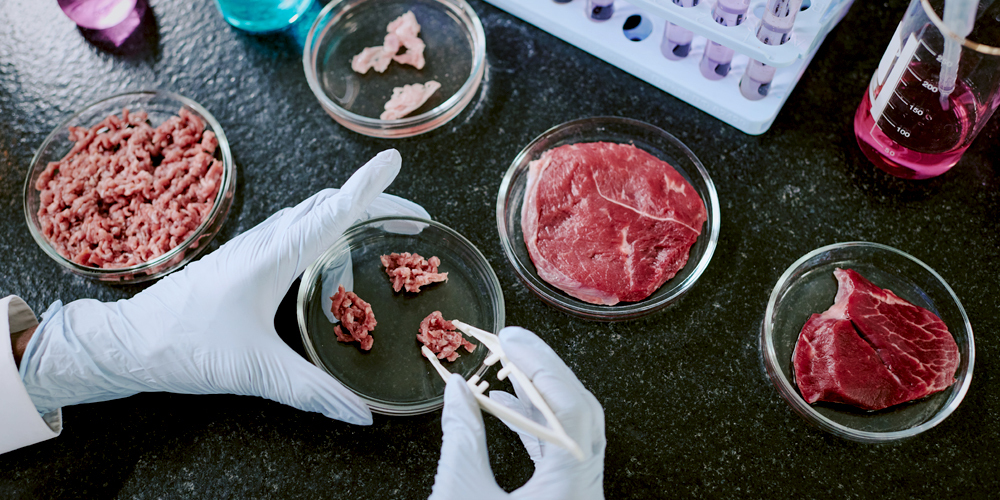
3D-printed steaks are reaching supermarket shelves—but are safety reviews and food labels keeping pace with the technologies transforming our food? Action Alert!
Listen to the audio version of this article:
THE TOPLINE
- 3D-printed meat alternatives are reaching supermarkets, joining cultivated meat and precision-fermented ingredients in a growing market of engineered foods.
- Matching selected proteins, taste, or texture does not establish that a substitute offers the nutritional complexity or long-term health effects of traditional foods.
- We need stronger independent oversight, publicly available safety evidence, and clear labels so consumers understand how these products are made, what their composition is, and how healthy or safe they are—all prerequisites of informed choice.
Plant-based steaks built with 3D printers are reaching supermarket shelves across the Northeast. Israeli company Steakholder Foods has launched its Perfecta brand with five alternatives: marbled steak, filet mignon, chicken breast, salmon patties, and white fish patties. The products are reportedly already in approximately 30–35 stores, with plans to expand.
The launch brings yet another version of engineered food to American dinner plates. It also raises questions ANH has been asking about cultivated meat and precision-fermented foods: How were they made? What evidence supports their safety and health benefits? Will their labels tell consumers enough to allow them to make an informed choice?
What the Printer Actually Does
To make 3D printed food, a food printer follows a digital design, depositing edible mixtures in controlled patterns. Plant proteins, fats, and other ingredients can be arranged to imitate muscle fibers, texture, and marbling. The newly launched 3D-printed foods are a blend of plant-based and cultivated ingredients. The goal is to reproduce the experience of eating a whole cut of meat; lab-grown or cultivated meat, by contrast, tend to be in sausage, patty, or nugget form.
The technology with 3D-printed foods may be different, but we’re dealing with similar issues we’ve discussed in relation to lab-grown meat: these companies seem to believe that meat is nothing more than a combination of proteins and fats, when in fact the nutritional profile of real meat is highly varied and far more complex (more on this below).
Different Technologies with Overlapping Possibilities
It’s worth differentiating these different technologies, as it can all get a bit confusing.
Cultivated meat is made by growing animal cells in nutrient media. The harvested cells then become foods like chicken nuggets. The products consist of animal cells, but no animals were slaughtered.
Precision fermentation uses microorganisms, usually genetically engineered, to manufacture selected ingredients, such as milk or egg proteins. Those ingredients are recovered and purified before being added to foods. For example, precision fermentation is used to produce the heme that is added to plant-based Impossible Burgers and the milk proteins that are the basis of “animal-free dairy milk.”
These methods can overlap. A 3D-printed food could contain plant proteins, cultivated animal cells, fermentation-produced ingredients, or a combination. Cultivated meat can also involve genetic engineering: FDA’s UPSIDE Foods review describes both cells selected for continued growth and cells engineered with an added chicken gene to keep multiplying. It also discusses recombinant growth proteins used in the culture medium.
The big issue here is not whether or not these foods reach our supermarket shelves. It’s really much more about transparency or, more specifically, the lack of it: consumers need to know which methods and ingredients were actually used in a given product and how these combinations of ingredients affect the human body when consumed. As we discussed previously, many of these foods will not likely have to be labeled as containing genetically engineered (GE) or “bioengineered” ingredients due to loopholes in the labeling law.
Copying A Protein Is Not Recreating a Food
The promise behind these products is that familiar taste, texture, and selected nutrients can be recreated through industrial design. ANH’s concern is that this approach vastly understates the complexity of food.
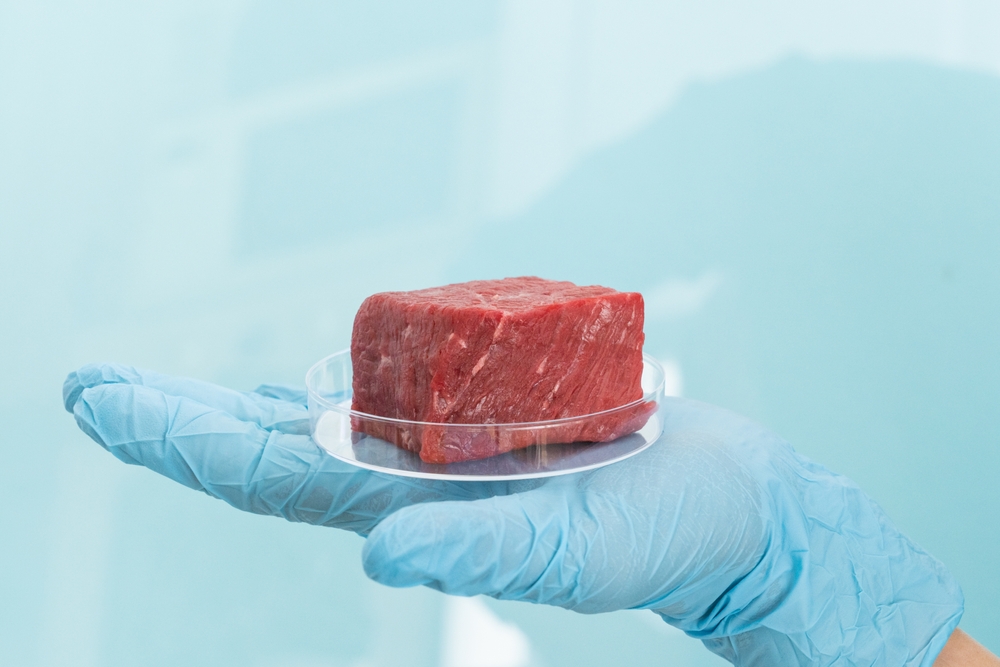
Human beings evolved eating complex foods from plants and animals with various combinations of microorganisms. These newly designed substitutes have no comparable history as whole foods in the human diet. Recreating nature’s complexity in a factory is an enormous challenge; matching a few components does not establish that the resulting food will have the same effects on health.
As we have argued previously, meat contains far more than a few proteins and fats. Its physical structure and the interactions among nutrients and other compounds also matter. Likewise, producing one milk protein does not recreate milk. The finished product’s nutrition depends on its full formulation, processing, and the availability of its nutrients to the body.
What Regulatory Review Actually Means
It’s important to emphasize that the entire federal government’s approach to regulating GE products is fundamentally flawed. Other than the sham labeling law, Congress has not passed legislation to address the unique health and ecological impacts of this new generation of GE foods. Instead, the government relies on a decades-old framework that fragments oversight of GE products across multiple agencies, shoehorning a new generation of GE products into laws largely written for other purposes.
A key principle of this approach is that regulators focus on the finished product rather than the process. In plain language: if it looks and smells like a tomato, the government will treat it like a normal tomato even if it was produced through genetic engineering.
All of this is to say that the oversight over these newer GE foods is, in our opinion, rather lax.
For printed plant-based foods, FDA generally does not approve the finished food before sale. Ingredients must have a lawful basis for use, and manufacturing, food-contact materials, and labeling must meet applicable requirements.
Precision-fermented ingredients frequently use the Generally Recognized as Safe, or GRAS, pathway. Companies can currently reach their own GRAS conclusions without notifying FDA, though that is set to change with the FDA’s proposed rule. Some submit notices and receive “no questions” letters, meaning the FDA has reviewed the company’s safety data, seen no issues, and given the company the green light.
Cultivated livestock and poultry products follow a different route: FDA reviews cell production through voluntary premarket consultations, while USDA oversees harvest and subsequent processing, inspection, and labeling. FDA examines manufacturing methods, genetic changes, and potential residues. Much of the safety case, again, depends on manufacturer-provided information and comparisons with conventional foods.
For foods being promoted as replacements for traditional staples, we believe this is too light a regulatory touch. The idea often described as “substantial equivalence” should not become a shortcut for assuming comparable long-term health effects. Similarity of a target protein cannot, by itself, answer every question about the finished food.
Safety Questions Deserve Public Answers
Despite what their proselytizers say, there are some key questions that remain unanswered about the safety of these foods. The Food and Agriculture Organization’s (FAO) conclusions supplied to international food regulators identify concerns about allergenicity, purification, strain stability, and scaling fermentation to industrial volumes. They also emphasize hygienic printer design and gaps in knowledge about some post-printing treatments.
One established concern is allergy. FDA’s milk-protein review recognizes that fermentation-produced beta-lactoglobulin can cause reactions in people allergic to milk. “Animal-free” does not mean allergen-free.

And what about the 92 previously unknown compounds found in precision-fermented milk? Remember, life depends on gene expression—and gene expression is regulated by epigenetics. Food is one of the most powerful environmental signals affecting gene expression. Introducing novel, engineered proteins into the diet is an open-air science experiment, and we’re the guinea pigs. Low-level inflammation triggered by unfamiliar proteins or contaminants would not announce itself dramatically. It will be a low hum in the background undermining our health if regulators do not take a closer look at these foods.
Will Shoppers Know What They Are Buying?
Not necessarily from the label alone. A printed plant-based product must identify its ingredients, but there is no universal federal requirement for a prominent “3D printed” disclosure. Listing plant proteins does not necessarily explain how the product was assembled.
Cultivated meat has more explicit differentiation: USDA has approved the term “cell-cultivated chicken.” But a production term is useful only if shoppers understand it. It also does not, by itself, explain whether genetic engineering was involved in developing the cells or producing their growth inputs.
Precision fermentation presents another transparency gap. As ANH has reported, an ingredient name can identify a familiar protein while revealing little about the engineered microbes that produced it. Under USDA’s currently operative bioengineered-food rules, disclosure depends on the final product, modified genetic material, and applicable exceptions. Genetic engineering in production does not automatically guarantee a bioengineered disclosure on the package.
The framework is changing: a court ordered key provisions of the GE labeling law, including the exemption for undetectable modified genetic material, vacated effective January 1, 2028. That still does not establish that every precision-fermented ingredient will require disclosure. Consumers need clear information about production methods without having to unravel these legal distinctions.
ANH believes the standard should be straightforward: meaningful independent scrutiny, publicly accessible safety evidence, and plain-language labels explaining how these foods were made. Our previous coverage has challenged the assumption that replacing farming with engineered substitutes improves health or sustainability. Those benefits must be demonstrated for the actual product and process.
A printed steak may look familiar. The decision to eat it should rest on honest information and credible evidence. Consumers deserve to choose foods rooted in nature, and they deserve to recognize an engineered substitute before it reaches their plate.
Action Alert!