

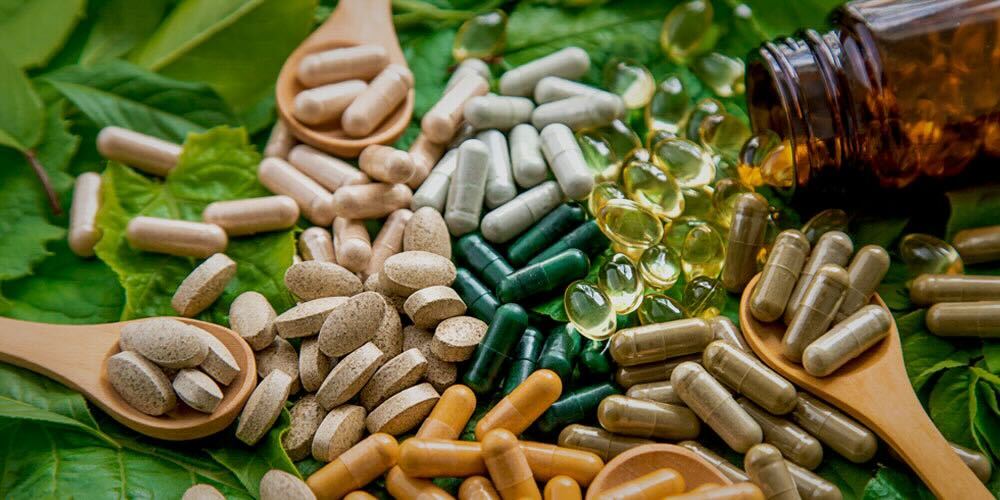
Sen. Dick Durbin’s reintroduced Dietary Supplement Listing Act threatens to shrink consumer choice, raise prices, and give the FDA sweeping new powers to sideline safe, effective supplements under the guise of “safety.” Action Alert!
THE TOPLINE
- The bill would require mandatory listing of all supplements at the FDA, creating a powerful enforcement tool that could be used to target, restrict, or remove products—especially high-dose and innovative formulations.
- Despite claims of improving safety, supplements have an exceptionally strong safety record, and there is no public health crisis that justifies expanding FDA authority.
- Mandatory product listing would stifle innovation, increase compliance costs and prices, and tilt the marketplace further in favor of pharmaceutical drugs over natural products.
Imagine walking into your favorite health food store or doctor’s office to buy supplements. Instead of shelves filled with a wide variety of products—different forms, potencies, and formulations tailored to individual needs—you find only a handful of basic options. The dosages are too low. Key ingredients are missing. Products you’ve relied on for years are simply gone. Just like’s already happened in Europe.
This is not just a thought experiment. It is the very real future Americans face if Senator Dick Durbin’s (D-IL) recently reintroduced Dietary Supplement Listing Act of 2026 becomes law.
This bill would require supplement manufacturers to submit detailed information to the FDA for every product they sell, including ingredients and dosages. On its face, this may sound reasonable. In practice, it hands the FDA a powerful enforcement tool it has repeatedly asked Congress for—and one it is likely to abuse.
As we’ll explain in more detail below, the key threat is not the list itself, but how the FDA would use it. A comprehensive registry gives the agency a ready-made tool to identify, target, and remove supplements it believes do not comply with its increasingly overreaching interpretations of existing law.
We believe Sen. Durbin and the FDA are using “safety” as a smokescreen. We believe the true purpose of this registry is to expand regulatory control over supplements and eliminate products the agency has long opposed—particularly high-dose nutrients, potent botanicals, and innovative formulations that compete with drugs.
A Solution in Search of a Problem
The facts haven’t changed. Dietary supplements have one of the strongest safety records of any consumer product category. Data from the American Association of Poison Control Centers’ National Poison Data System (NPDS) consistently show that dietary supplements are associated with remarkably few serious adverse outcomes. In many years, the data show zero deaths attributed to supplements. In 2024—the most recent year for which data are available—dietary supplements or vitamins don’t even appear in the top 25 substances most frequently involved in adults exposures.
Of the exposures that have been recorded at U.S. Poison Centers, oft-cited adverse event statistics for “vitamins” or “dietary supplements, herbals and homeopathic” frequently include:
- Children accidentally swallowing supplements without supervision
- Elderly individuals choking on pills
- Heart palpitations linked to excessive use of diet pills, sexual enhancement products, or highly caffeinated energy drinks
When placed in proper context—and compared with adverse events from pharmaceutical and foodborne illness, and even personal care product and cleaning agents—dietary supplements are among the safest products to which Americans are exposed.
The point is this: the supplement industry is not sickening or killing Americans at rates that justify sweeping new regulatory powers.
So why the push for MPL? For decades, the FDA has taken an antagonistic stance toward natural products—a posture closely tied to its financial and institutional dependence on the pharmaceutical industry. Mandatory product listing fits this pattern, advancing an agenda that undermines and restricts non-patentable, lower-cost supplements because they compete with drugs.
The Real Threat: Maximum Potency Limits
Sen. Durbin’s bill puts us on a road to the elimination or restriction of high-dose supplements.
We’ve discussed this danger in previous coverage. Earlier versions of Durbin’s legislation called for MPL as well as the creation of a list of supplements that could cause “potentially serious adverse events.” Government bodies have already developed levels above which they believe nutrients can cause adverse events (referred to as tolerable upper levels, or “ULs”). Like other government benchmarks for nutrients, these levels ignore the fact that many Americans clearly benefit from nutrient intakes well above these levels, particularly in therapeutic or preventive contexts.
We believe the intent is clear: require companies to register all their products with the FDA, giving the agency a list that can be referenced if/when maximum levels of nutrients are set for supplements under the guise of preventing “potentially serious adverse events.” The FDA can then use the list to eliminate these “dangerous” high-dose products at the drop of a hat. The situation in Europe provides the blueprint (see here and here).
We cannot allow Sen. Durbin and his anti-supplement allies to put us on a path towards European Union-style supplement restrictions
How MPL Enables the FDA to Kill Innovation
Mandatory listing also supercharges the FDA’s ability to attack innovative supplements under its “new dietary ingredient” (NDI) framework—a framework we have described as a de facto pre-approval system for new supplements.
Take curcumin as an example of how this could play out. This compound has an array of well-established health benefits (anti-inflammatory, anticancer, antiviral, antioxidant, and more), but is difficult for the body to absorb. Imagine your doctor tells you about a great new liposomal curcumin product that has proven to have greater bioavailability, meaning you get more of this health-promoting nutrient than from other products. Because it is liposomal, it is likely considered “new” and thus subject to onerous NDI regulations. You won’t be surprised to know the mechanism to ban products like this is already gathering pace in Europe.
If the FDA gets Sen. Durbin’s list, the agency will easily be able to see all the products on the market that are considered “new” or “potentially unsafe” (that’s every substance known, by the way) but have not yet complied—maybe including your liposomal curcumin. The FDA can simply remove these products in one go. Just like those over-zealous regulators in Europe.
Compliance with NDI requirements is expensive and time-consuming—often costing millions of dollars. Unlike drugs, supplements cannot be strongly patented, meaning companies cannot recover these costs. When an innovative product is pulled from the market, it is usually gone for good.
The Bottom Line
The Dietary Supplement Listing Act of 2026 is not about safety. It is about control.
It gives the FDA unprecedented power to monitor, restrict, and ultimately eliminate supplements that don’t align with the agency’s preferences or pharmaceutical interests. It would raise costs, crush innovation, and deprive Americans of tools they rely on to support their health.
Congress should reject this bill—and instead focus on policies that protect consumer access, respect the proven safety of supplements, and support innovation in natural health.
Health freedom depends on it.
Action Alert!


Is this not AMERICA???? FREEDOM is what has always set us apart, and made us great!
You need to provide a link so folks can instantly identify and contact their Congressional reps. Tell us where this bill is in the process and the timeline. And prepare a script so people don’t have to do so when they call.
As a person whose well-being depends heavily on supplements–including one that destroys the spike protein caused by the mRNA in the covid treatments–stopping this legislation is critical.