

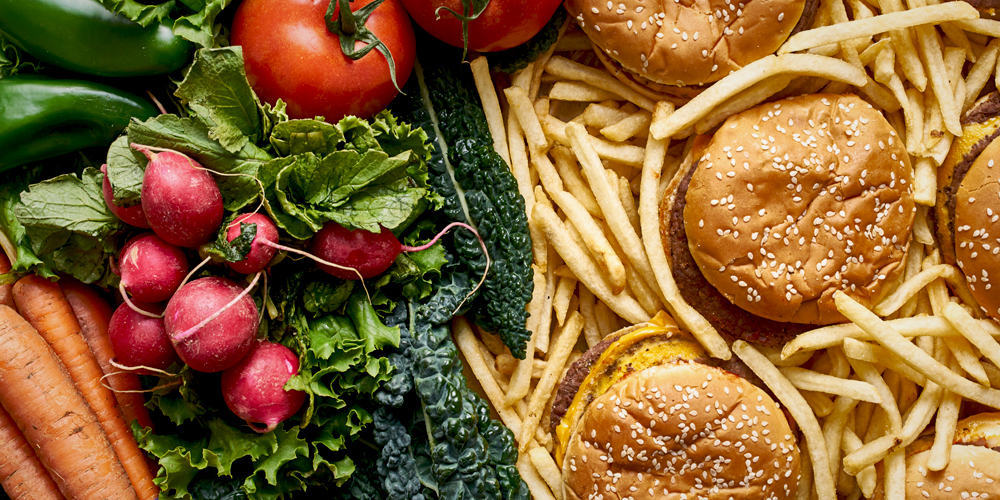
A new scientific paper and expert panel has challenged the simplistic “ultra-processed food” narrative and has been instrumental in redefining US policy in this area. But does it go far enough? How does it deal with the growing amount of ‘synbio’ or bioengineered food hitting US supermarket shelves?
Listen to the audio version of this article:
THE TOPLINE
- A new expert panel report recommends using the NOVA Category 4 system as the scientific foundation for ultra-processed food (UPF) policy—potentially reshaping food labeling, school meals, and regulation nationwide.
- While the focus on UPFs is an important step forward, the NOVA framework overlooks critical factors like cooking methods, storage, mechanical processing, and the emergence of novel compounds in engineered foods such as lab-grown meat.
- A broader “farm-to-fork” understanding of food health—emphasizing home cooking from scratch, minimally processed whole foods, gentle cooking methods, and food education—is essential to protecting the long-term health of Americans.
As grocery shelves fill with increasingly engineered and ultra-processed products, including lab-grown foods marketed as “healthy” and “sustainable,” distinguishing between foods that are genuinely healthy and those that are not is getting increasingly difficult.
With mounting evidence of the negative health effects of consuming ultra-processed foods (UPFs), the push to define and regulate them is gaining real momentum. A May 2026 expert panel report from Healthy Eating Research (HER) has recommended that the NOVA Category 4 classification — which identifies foods as industrial formulations containing few or no whole-food ingredients — become the official scientific basis for UPF policy in the US. With modeling showing that roughly 72% of US packaged foods meet this definition, the implications for food policy, school nutrition, taxation, and labeling are enormous.
At ANH, we welcome this growing recognition that industrial food processing is harming the public’s health. But we also believe the conversation needs to go much further in order to arm people with the information necessary to differentiate harmful from healthy foods.
NOVA Category 4: A Useful but Incomplete Lens
The NOVA system has some strengths. It draws attention away from single nutrients and toward the degree of processing as a meaningful health variable. Note that the NOVA system is primarily concerned with the nature and purpose of processing, not simply whether a food has been physically altered.
But the policy focus on NOVA Category 4 as the primary framework has real limitations that must be considered.
NOVA classifications fail to take into account the effect of mechanical processing, even though mechanical processing can dramatically affect how foods behave metabolically and nutritionally. For example, both the intensive milling of grains for use in children’s breakfast cereals or their extrusion at high heat for some cereals and many savory snacks, dramatically shortens starch chain lengths, creating products with a substantially higher glycemic load than their minimally processed equivalents. This means that a kid’s breakfast cereal labeled as ‘Wholegrain’ can share a similar ingredient panel to a box of unsweetened, minimally-processed muesli, while having profoundly different effects on blood sugar and metabolic health.
The HER panel also discussed a growing debate around the “healthy UPF” distinction — recommending that products meeting a modified version of FDA’s “Healthy” criteria be exempted from UPF-targeted policies. The Physicians Committee for Responsible Medicine has similarly argued that plant-based UPFs like wholegrain breads and some meat alternatives should be treated differently from processed meats and sugary drinks.
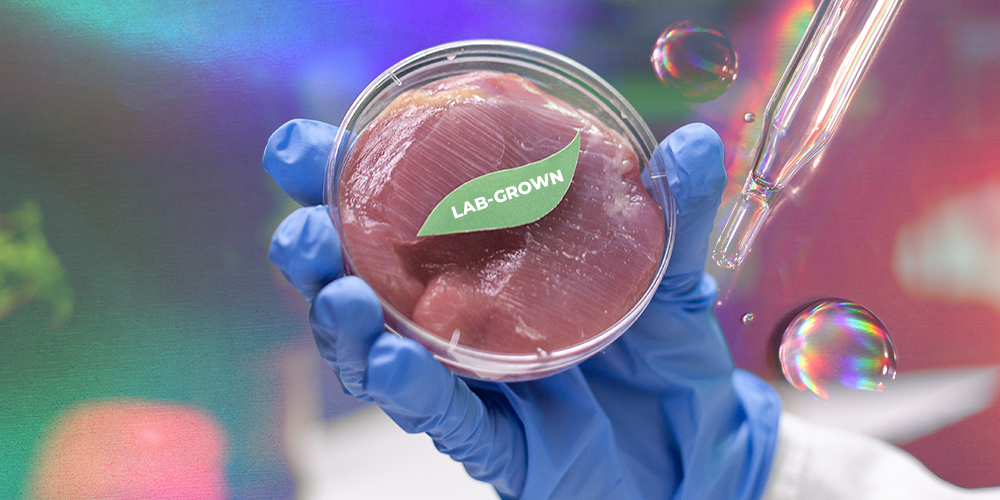
Sounds good, yes? But this framing still completely ignores some of the emerging safety concerns with lab-grown meat that we’ve discussed elsewhere. In some key nutrient categories such as protein and fat, lab-grown meat may appear very similar to processed or even unprocessed meats. But the point is, to determine the health impact of a food, we have to look at the overall nutrient profile and within which these nutrients are found, not just the presence of a few isolated nutrients.
What about the dozens of previously unknown compounds that are showing up in lab-grown, ‘synbio’ or so-called ‘precision fermentation’ food products that are being marketed as eco-friendly, alternatives to natural foods?
Beyond UPFs
If the goal is to maximize healthy foods and minimize unhealthy foods, we need to go far beyond NOVA classifications. Our collogues at ANH International have gone into these issues in some detail. Here are some points to keep in mind:
- High-temperature cooking creates harmful compounds. Grilling meat and other foods at high heat generates heterocyclic amines (HCAs) and polycyclic aromatic hydrocarbons (PAHs), compounds formed when muscle proteins react with flame and smoke. These are recognized carcinogens. Charred or heavily browned foods — regardless of how “natural” their ingredients — carry real cancer risk, particularly for colorectal and pancreatic cancers. Air frying, while marketed as healthier than deep frying, can produce similar concerning compounds depending on temperature and food type.
- Acrylamide forms in starchy foods cooked at high heat. Chips, crackers, roasted coffee, and even some baked goods produce acrylamide — another probable carcinogen — through the Maillard reaction at temperatures above 120°C. Again, this is a processing effect invisible to any ingredient-based classification.
- Storage degrades nutritional value. A fresh vegetable and the same vegetable after weeks in the refrigerator are nutritionally different foods. Oxidation degrades vitamins, especially vitamin C and folate. The glycemic index of some starches increases with storage and reheating. How long food sits before it’s eaten is part of its nutritional story.
- How you cook at home matters too. Boiling vegetables leaches water-soluble vitamins. Overcooking destroys heat-sensitive nutrients and enzymes. Conversely, some processing genuinely enhances nutrition: cooking tomatoes increases lycopene bioavailability; fermenting grains reduces antinutrients; lightly steaming broccoli can preserve more glucosinolates than long boiling. Food is not static — its nutritional value is shaped at every step from field to fork.
This is why ANH has long advocated that we understand food as information — a complex system of compounds that speak uniquely to multiple physiological pathways in the human body simultaneously. Yes, food is really a form of language, and when we deviate significantly from the foods with which humans have evolved over millennia, communication often breaks down, and disease is more likely to manifest.
What ANH Recommends
Policy frameworks focused on reducing UPF consumption are a step in the right direction. But reducing harm means more than swapping a food with emulsifiers for one without them. It means rebuilding our relationship with food itself.
- Cook from scratch, as much as possible. Home cooking from whole, minimally processed ingredients remains the single most powerful dietary intervention available to individuals and families. It keeps you in control of heat, time, and ingredients. It reconnects you with food as something living and varied, not a manufactured product.
- Minimize packaged foods as a category, not just the worst-offending ones. Even when a packaged food passes the “healthy UPF” test, it is still a product of industrial food manufacturing — optimized for shelf life, profit margin, and palatability, not your long-term health.
- Be mindful of cooking methods. Favor gentle heat: steaming, poaching, slow cooking, light sautéing. Reserve high-heat grilling or roasting for occasional use and avoid charring.
- Priorities diversity and whole-food density. ANH’s Food4Health guidelines emphasize eating a wide variety of vegetables (in greater proportion than fruit), quality proteins, healthy fats, and minimally processed complex carbohydrates. Nutrient density — not calorie counting — is the goal.
- Teach children to cook. Culinary skills are a public health intervention. Young people who know how to prepare food from whole ingredients are more likely to eat well throughout life, more resilient to food industry marketing, and better equipped to make genuinely informed choices. Schools, families, and communities all have a role here.
- For those managing or recovering from cancer, the evidence is particularly compelling: avoiding industrial processing, high-heat cooking compounds, and highly refined carbohydrates should be a priority — over and above whatever an ingredient label says.
The Bigger Picture
The UPF policy conversation is important and long overdue. But if it results only in reformulated products that pass new ingredient-marker tests while remaining industrially manufactured, nutritionally impoverished, chemically altered compared with natural foods, laced with known or unknown non-nutritive chemical ingredients or novel compounds, and cooked in ways and at temperatures that damage nutritional molecules or generate carcinogens — we will have achieved very little.
Real food reform means understanding the entire journey from farm to table, recognizing the role of foods as information for the body, and taking responsibility for what happens in our own kitchens and homes. No regulatory definition will do that for us.
Please share this article widely and consider making a donation to support our work.


Omitted the now-well-documented harms from PUFAs. Seed oils create inflammation that creates ROSs that significantly increase chronic disease.
I stopped consuming all “vegetable oils” (a.k.a. seed oils that include soybean, corn, canola, cottonseed, rapeseed, sunflower, rice bran and safflower oils). I was influenced by the first YouTube presentation below (by Chris Knobbe, MD, link below), then by reading Dr. Knobbe’s book (link 2nd to bottom). Later, I found Dr. Catherine Shanahan’s book (link at bottom).
After completely removing seed oils from my diet for just a week, I was able to resolve inflammation problem I had in a cervical disk that had bothered me for three weeks. More important, symptoms of autoimmune disease I’ve had for over 30 years went away in just a few months. (I was halfway to a thyroid storm with Graves disease in 1994.) And, all other autoimmune symptoms I’d had for 30 years disappeared, including most food allergies.
Removing seed oils from my diet wasn’t easy, because practically all restaurants use them. I’ve included a restaurant lookup info at the bottom of this information to help you out. Most Americans consume the majority of their seed oils at restaurants or in junk foods.
According to both Drs. Knobbe (“The Ancestral Diet Revolution: How Vegetable Oils and Processed Foods Destroy Our Health – and How to Recover!”) and Kate Shanahan (“Dark Calories: How Vegetable Oils Destroy Our Health and How We Can Get It Back”), seed oils are implicated in practically all chronic diseases in the U.S., including coronary heart disease, hypertension, stroke, cancers, type 2 diabetes, metabolic syndrome, obesity, Alzheimer’s disease, autoimmune diseases, age-related macular degeneration (AMD), osteoporosis and many others.
One of the truly awful aspects of seed oils is that they accumulate in body fat. In the U.S., it’s estimated that about 20-30% of our body fat is linoleic acid. (The healthy percentage should be around 5%) Then, the half-life of linoleic acid is 680 days! In other words, it takes years to get rid of this toxic fat.
Another insidious aspect: Seed oils stimulate appetite via the endocannabinoid receptors at the start of the small intestine. Ever wonder what the gastric bypass bypasses? It’s these receptors.