


A federal court in Boston has temporarily halted several of RFK JR.’s vaccine policies, setting up a legal and political clash over who gets to shape U.S. immunization policy—and how.
Listen to the audio version of this article:
THE TOPLINE
- A federal judge in Boston has temporarily blocked Robert F. Kennedy Jr.’s overhaul of the CDC’s vaccine advisory committee, pausing new appointments, policy changes, and an upcoming meeting.
- A key aspect of the ruling concerns whether the restructured ACIP met standards for expertise, but the court may have overstepped by substituting its judgment for the executive branch and reinforcing an entrenched, closed network that has long shaped vaccine policy.
- Beyond the immediate legal fight, the case highlights deeper tensions over scientific authority, transparency, and evidence gaps in the childhood vaccine schedule—raising broader questions about who controls vaccine policy and how decisions affecting millions are made.
What Happened
U.S. District Judge Brian E. Murphy issued a ruling that pauses multiple actions taken by the Advisory Committee on Immunization Practices (ACIP), the body that advises the Centers for Disease Control and Prevention (CDC) on vaccine recommendations. The decision blocks ACIP from holding its scheduled March meeting and suspends both the appointment of 13 newly named committee members and recent changes to the CDC’s recommended childhood immunization schedule made under Health and Human Services (HHS) Secretary Robert F. Kennedy Jr.
The ruling stems from a lawsuit brought by the American Academy of Pediatrics (AAP) and other medical organizations. They challenged Kennedy’s overhaul of ACIP, including his decision to dismiss prior members and appoint new ones, as well as policy changes affecting COVID-19 vaccines and the broader childhood schedule. Rather than issuing a full injunction, the court imposed a “stay.” For now, federal vaccine policies revert to those that were in place before RFK Jr. took office.
ACIP recommendations directly shape which vaccines are covered by insurance, purchased by the federal government, and required in practice for school attendance.
Speaking to this ruling, ANH General Counsel Jonathan Emord said, “The decision rests on a misapplication of the Administrative Procedure Act. The actions enjoined are well within the discretion of the HHS Secretary and do not constitute final agency rules under the APA.
“Moreover,” Emord continued, “even if they were subject to the APA’s prohibition on arbitrary and capricious agency action, they were decisions backed by sound science and reasonable exercise of discretion, thus not constituting the kind of dereliction required to prove that relevant factors were not taken into account and weighed.
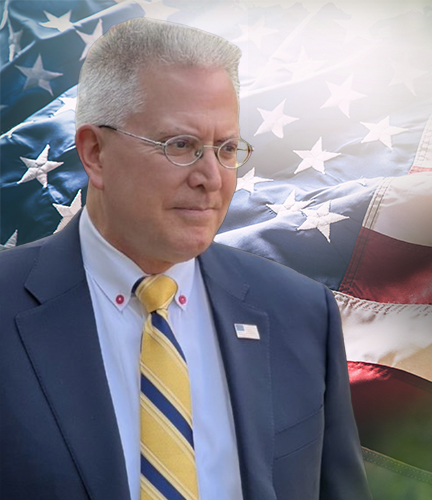
“From a broader public policy perspective,” Emord added, “the Judge has invaded a sphere of political discretion in the executive branch that is a form of activism that violates the separation of powers. Judges are not to decide the prudence of policy decisions but their legality and, in doing so, are to base their decisions on the plain and intended meaning of the statutory law, not on what they fancy the law ought to be. Judge Murphy failed to perform his proper role and invaded the province of the executive branch.”
Pictured left: Jonathan Emord, Esq., ANH-USA General Counsel
A Court Stepping into Scientific Governance
Central to the judge’s ruling is the idea that the reconstituted ACIP does meet statutory requirements for expertise and balance. But in reaching that conclusion, the court effectively substituted its own judgment for that of the HHS Secretary—deciding which credentials and perspectives count as “relevant” to vaccine policy.
The court’s dismissal of Robert Malone, MD, is a case in point. The judge’s ruling states that, although Dr. Malone and several other ACIP members have “some experience arguably relevant to ACIP’s function, [they] appear to lack the qualifications and experience to constitute expertise in vaccines and immunization.”
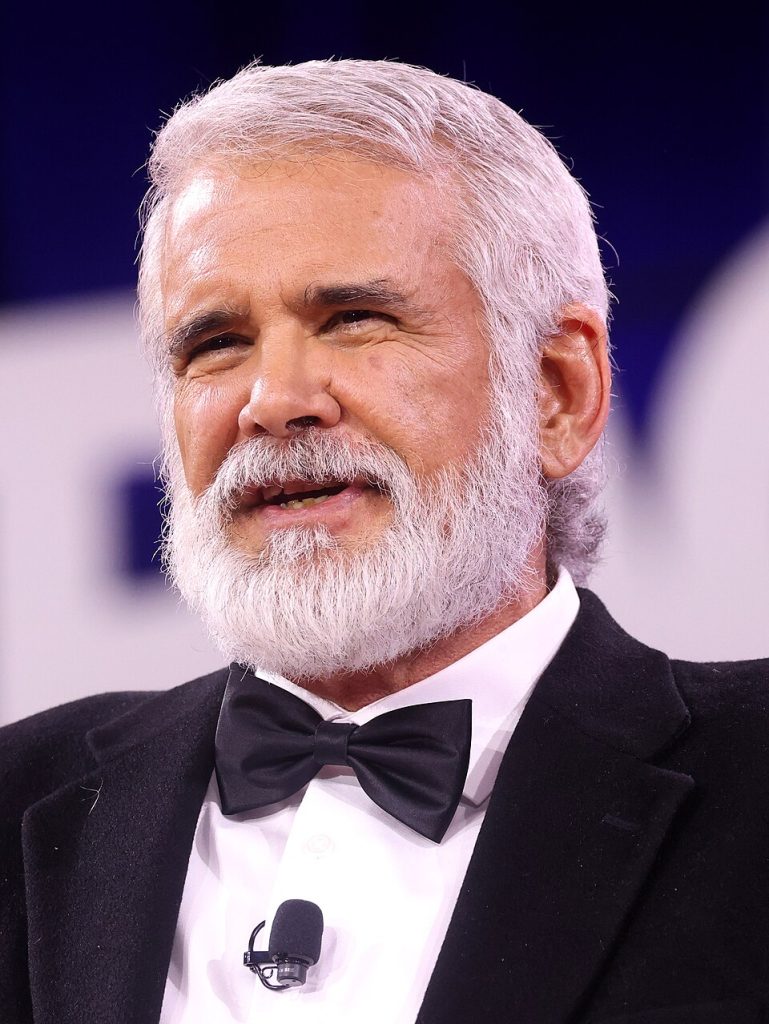
A pioneer of mRNA vaccine technology, Dr. Malone holds early patents underlying today’s COVID-19 vaccines and has spent decades working on vaccine development, clinical trials, and infectious disease response. Over the past three decades, he has remained continuously engaged in vaccine and infectious disease research, development, and oversight. His résumé includes leadership roles in influenza vaccine development, work on Ebola and Zika countermeasures, and participation in dozens of clinical trials across all phases.
Pictured left: Robert Malone, MD.
Photo credit: Gage Skidmore
He has advised the World Health Organization, chaired and reviewed vaccine-focused NIH study sections, and contributed to approximately 100 peer-reviewed publications spanning vaccine technology, immunology, and emerging infectious diseases.
Dr. Malone brings both foundational scientific insight and decades of hands-on experience in vaccine development—more than enough to qualify for ACIP.
What seems to trouble the court is not a lack of expertise, but a lack of alignment. For decades, vaccine policy has been shaped by a relatively closed network of agencies, academics, and organizations with ties to pharmaceutical interests. That system has coincided with a steadily expanding childhood vaccine schedule.
Kennedy’s reforms sought to open that system to broader perspectives. You don’t have to agree with every change to see the value in that goal—unless you believe those connected to vaccine makers should exclusively shape vaccine policy.
By freezing these reforms, the court preserves the status quo. And in a system where recommended vaccines carry liability protections, that status quo comes with powerful incentives—ones that may not always align with our health.
“Controversial” Votes?
It’s also worth looking at the changes made to ACIP’s recommendations that are part of the subject of this lawsuit.
The three votes made by the new ACIP committee were as follows:
- June 2025: Recommended removing thimerosal from flu vaccines for children, pregnant women, and adults. Thimerosal is a mercury-based compound. There is no safe level of exposure to mercury, which has been linked to severe neurological and cardiovascular issues.
- 2025: Shifted COVID-19 vaccines from routine recommendation to “shared clinical decision-making.”
- December 2025: Recommended individualized decision-making for the hepatitis B vaccine (including the birth dose) for low-risk infants.
None of these changes ban vaccines or prevent those who want them from getting them. Instead, they introduce a greater role for clinical judgment and patient choice.
Reasonable people can debate these changes. But characterizing them as an assault on science is quite a stretch. If anything, they represent modest efforts to reform vaccine policy in light of uncertainty, risk tolerance, and the need for informed consent—principles that should be at the heart of any medical decision-making framework.
The Bigger Issue: Evidence Gaps and Public Trust
This case brings up an uncomfortable truth: the evidentiary foundation for the full childhood vaccine schedule remains incomplete.
As ANH-USA has long emphasized, the cumulative schedule—now encompassing dozens of doses across numerous vaccines—has never been studied as a whole for long-term safety or efficacy. This is not a fringe claim; it reflects findings acknowledged by government advisory bodies, including the National Academies of Sciences. In a 2013 report, the Academy concluded, “Key elements of the schedule—the number, frequency, timing, order, and age at administration of vaccines—have not been systematically examined in research studies.”
Yet for years, ACIP has rubber stamped new vaccine requirements that function as de facto mandates. In most states, children must follow the CDC schedule to attend school, with limited exemptions. Policies with sweeping real-world consequences are built on a patchwork of evidence that does not fully address how the entire schedule performs in practice.
Where This Goes Next
The court’s ruling is not the final word. Appeals are likely, and the legal battle over ACIP’s composition and authority will continue. But the broader debate over vaccine policy will not be easily resolved.
At its core, this is a contest over who controls the framework of vaccine policy in the United States—and whether that framework is open to meaningful scrutiny and reform.
If there is a path forward, it lies not in entrenching one side or the other, but in committing to higher standards of evidence, greater transparency, and genuinely balanced oversight. For policies that affect millions of children and families, anything less is not good enough.



I have a question. So the judge who “halted” the “Update” has no knowledge of vaccines, no scientific point to his validation and is therefore choosing to use a “legal loophole” to stop the $$$ from which I would bet my entire life savings that he/she has specifically received funding via NGO to run for their current position. ( I know it!) With that being said, what legal argument can be made for halting the change? If the judge halts the CDCs determination then on what basis is he/she doing so? (Is that basis on “safety”- ie hypothesis that loss of vaccines would cause greater child hood deaths?) If the legal decision is based on a “fallacy” then not only has the judge stepped outside their boundary but they are now interfering with a federal branch of the government who have scoured through the medical data, and re-established the “dangers” of the advanced schedule as it may cause more harm. In other words the judge is clearly putting themselves in between efficacy and opinion! (There are no substantiative data results that can validate their opinion especially if you have watched the hearings with Attorney Ali who argued on behalf of the vaccinated! (Brilliant man who read all the data by the way!). Please help me understand? Thank you.
The supreme court is like a back stop for any action that seriously affects the mega corporate bottom line. Way back in the late 1800’s they headed off rising anti corporate sentiment by declaring that they did not want to hear whether corporations had the same rights as people, because they were “of the opinion that they do,” on top of the special rights they have that people don’t. They effectively made law! Then in another corporate ruling lately, they doubled down and said that money is equal to free speech, and nobody can limit the spending of money on any kind of speech. And that’s why elections are so expensive. That’s why nearly all candidates that win take corporate bribes. That’s why, as Biden said to a room full of mega banksters after he was elected, “nothing will materially change.” That’s why I don’t vote for Republicrats.