

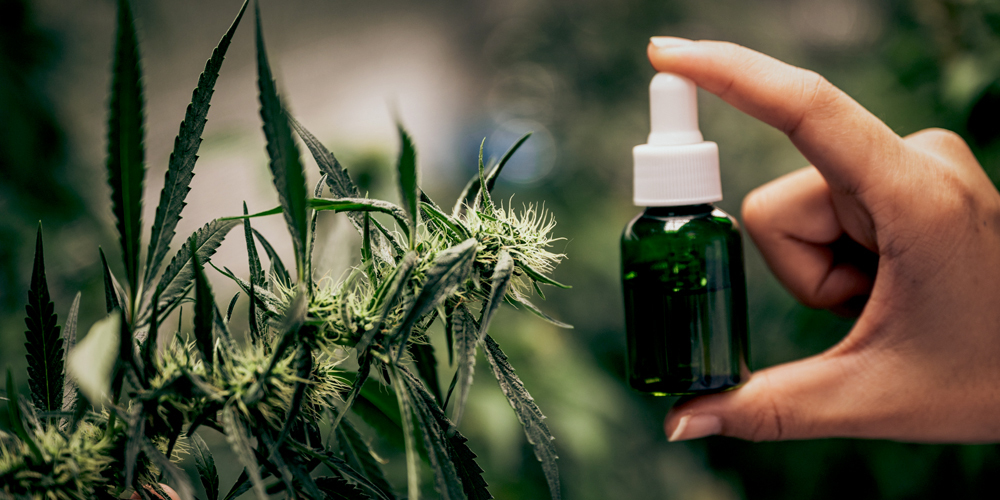
A bad hemp bill could be moving forward in Congress that severely limits hemp options for consumers. Action Alert!
Listen to the audio version of this article:
THE TOPLINE
- Rep. Morgan Griffith is considering advancing H.R. 7212 through budget reconciliation—a bill that could sharply restrict access to CBD and other nonintoxicating hemp products.
- The bill would remove covered hemp products from the supplement category, prohibit structure/function claims, and impose fallback cannabinoid limits if FDA misses its deadline—potentially increasing costs and reducing choices.
- Urge Congress to reject H.R. 7212 and support S. 3474, which preserves a pathway for cannabinoid supplements and focuses explicit serving and package limits on THC.
Imagine having to buy 30 small packages to get the amount of CBD you now purchase in a single bottle. That is the kind of disruption buried in the Hemp Enforcement, Modernization, and Protection Act.
As we’ve been detailing for some time, there are major changes underway for how hemp is treated by federal law, which could have profound effects on your access to hemp oil and CBD.
Last year, Congress quietly enacted a near-total ban on ingestible hemp products that will take effect later this year. To avert that ban, there are several bills being considered that set up an alternative regulatory framework for hemp.
Of note, Rep. Morgan Griffith (R-VA) is currently considering using the budget reconciliation process to advance his hemp bill, potentially allowing it to move through the Senate without facing a filibuster. The proposal could sharply restrict access to CBD and other nonintoxicating hemp products.
Rep. Griffith’s bill, H.R. 7212, would give the FDA sweeping authority to cap the cannabinoid content of products, including nonintoxicating CBD. If FDA failed to finalize its limits within three years, the bill would impose fallback limits of just 10 milligrams of total cannabinoids per oral serving and 50 milligrams per package.
The proposal would also exclude covered hemp products from the dietary supplement category and prohibit labeling claims about their effects on the body’s structure or function.
There is legislation already before Congress that creates a better regulatory framework: the Cannabinoid Safety and Regulation Act. That bill does not give FDA the power to regulate non-intoxicating cannabinoids, just THC. It also preserves structure/function claims for CBD supplements. It is a much better bill to ensure consumer access to a wide variety of health-promoting products.
Hemp Belongs Within the Supplement Framework
The Dietary Supplement Health and Education Act of 1994, or DSHEA, expressly encompasses herbs, botanicals, and their extracts and constituents. Nonintoxicating hemp products belong within that framework, subject to appropriate safety requirements. (As a separate issue, Congress should resolve CBD’s drug-preclusion problem and protect that route to market.) Dietary supplements are a category of food, and hemp has been consumed by humans as food for millennia.
H.R. 7212 removes cannabinoid hemp products from the supplement definition, creating a separate regulatory category with its own requirements.
This sets a bad precedent. Each new exception makes it easier for future political battles to move another class of natural products outside the framework consumers have relied on since 1994.
ANH agrees that products sold as dietary supplements should not deliver an intoxicating high. A sensible approach would establish evidence-based thresholds for intoxicating cannabinoids while preserving nonintoxicating botanical products as supplements.
We already understand that a plant’s capacity for misuse does not erase its legitimate food uses. Nutmeg can cause intoxication and poisoning when misused, yet remains a familiar culinary ingredient. Association with an intoxicating compound should not justify excluding an entire botanical category from a regulatory scheme that has worked for decades. Limiting the amounts of intoxicating substances through legal mechanisms is the rational way forward, rather than throwing the entire baby out with the bathwater.
Small Limits Could Have Large Consequences
H.R. 7212’s limits reach beyond THC, the cannabinoid principally associated with a cannabis high. Its total-cannabinoid ceiling would count CBD and other nonintoxicating cannabinoids together. A THC-free serving containing 8 milligrams of CBD and 4 milligrams of CBG would exceed the 10-milligram fallback limit. Putting these dose limits into perspective, clinical trials that have demonstrated mood-related benefits such as reducing anxiety with no safety concerns typically deliver CBD in doses ranging from 100 – 600 mg/day.
The package restriction could be even more disruptive. Thirty capsules containing 10 milligrams of CBD each would meet the serving limit but contain six times the permitted amount per package. A bottle holding 1,500 milligrams of CBD would contain 30 times the package allowance, before counting any other cannabinoids.
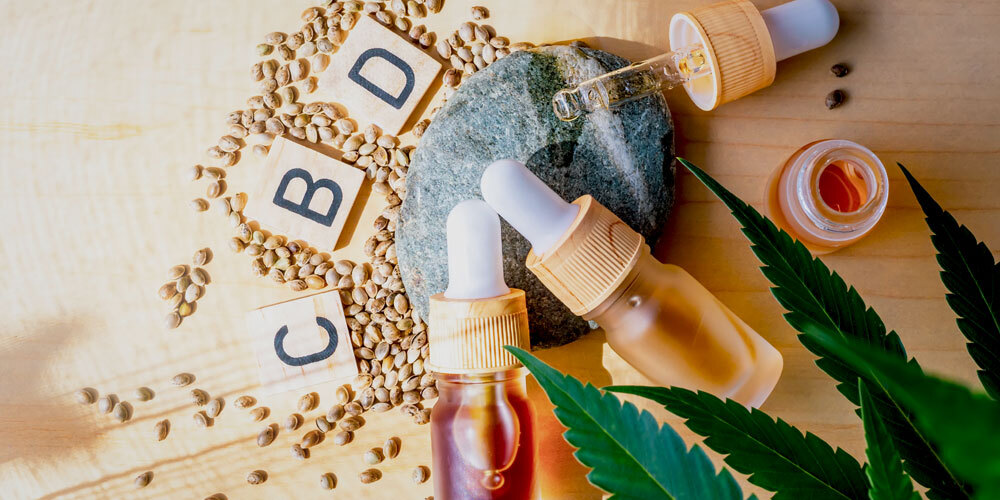
To obtain 1,500 milligrams of CBD under a 50-milligram package ceiling, a consumer would need at least 30 packages. More packaging and handling would likely increase costs. Some companies could reformulate; others might abandon products that no longer make commercial sense. Consumers who have found a particular formulation useful could face fewer choices and more expense.
Note that those numbers would only apply if FDA missed its three-year deadline. But do we really want to leave it to the FDA to decide how much CBD is OK for you to have in a package or serving—the same agency that insists CBD cannot be marketed as a dietary supplement because it exists as a drug?
A Long History Beyond Intoxication
Archaeological research documents hemp’s longstanding cultivation in Asia for uses including fiber and seed and its place among ancient China’s important grain crops. Hemp supplied cloth and cordage for generations, supporting the early manufacturing and maritime trade that drove the industrial revolution. During World War II, the USDA’s Hemp for Victory film encouraged American farmers to grow the crop for the war effort.
That history shows why treating hemp primarily through the lens of intoxication is misguided. Food, fiber, and botanical uses deserve to be understood on their own terms.
Our Bodies Have Their Own Cannabinoid System
Protecting access to natural, full-spectrum hemp products has to be a top priority for natural health and freedom of choice. The human body has an endocannabinoid system (ECS), a signaling network that helps regulate pain, mood, appetite, metabolism, immunity, and brain activity. Our understanding of this system is relatively new: it was just in 1988 that scientists first discovered cannabinoid receptors in rats. Researchers have proposed that disrupted endocannabinoid signaling may be involved in conditions as diverse as migraines, fibromyalgia, and irritable bowel syndrome.
Research on exercise shows that a bout of physical activity can increase circulating endocannabinoids. This helps explain why the system interests researchers studying the connections between movement and well-being. Sedentary lifestyles can have a negative effect on our endocannabinoid system.
Given all of this, it would be perfectly reasonable for a consumer to want to supplement with non-intoxicating cannabinoids to support their health. That choice should not be limited by the FDA or Congress.
Support a Better Path Forward
As ANH has previously explained, the Cannabinoid Safety and Regulation Act offers a better starting point. Its explicit serving and container limits focus on THC rather than the combined amount of all cannabinoids. It also expressly provides a pathway for cannabinoid dietary supplements and allows substantiated structure/function claims.
Congress should not use a budget package to advance restrictions that could eliminate familiar nonintoxicating hemp products. Tell your lawmakers to oppose H.R. 7212, including efforts to attach it to reconciliation legislation, and support S. 3474.
Consumers should not lose access to useful botanical products because lawmakers fail to distinguish them from intoxicants.
Action Alert!