

A federal ban on nearly all hemp-derived products — including the CBD and full-spectrum oils millions of Americans rely on — takes effect November 12, 2026. Two pro-hemp bills now in Congress offer the last realistic path to stop it. Action Alert!
Listen to the audio version of this article:
THE TOPLINE
- A near-total hemp ban will take effect November 12, 2026 unless overruled by either of two pro-hemp bills. The proposed ban stems from a provision in a 2025 appropriations law that redefines hemp and caps THC at 0.4mg per container — effectively outlawing most full-spectrum CBD oils, hemp supplements, and whole-plant extracts that millions use for wellness.
- The science behind the ban is deeply flawed: regulators are skipping proper risk-assessment methodology by treating any detectable THC as dangerous.
- Two Senate bills offer a path forward: the Hemp Planting Predictability Act would delay implementation by three years, while the broader Cannabinoid Safety and Regulation Act would replace the ban with a proportionate framework — mandatory testing, labeling, age restrictions, and a ban on synthetic cannabinoids — while explicitly protecting hemp-derived supplements.
What Happened
On November 12, 2025, Congress quietly enacted Public Law 119-37 through a spending bill. Buried inside was a provision that rewrites the federal definition of hemp. Under the 2018 Farm Bill, hemp was any Cannabis sativa product containing less than 0.3% delta-9 THC on a dry weight basis. That definition allowed a legitimate hemp industry to grow, allowing consumers access to a wide variety of natural hemp products.
The new law changes “delta-9 THC” to “total THC“ and adds a cap of 0.4 milligrams of THC per container on finished products. It also excludes any cannabinoid that wasn’t naturally produced inside the plant, sweeping in synthetics like much of the delta-8 market.
The official goal was to close the so-called “delta-8 loophole.” The actual effect is a near-total ban on the hemp industry. The full-spectrum CBD oils that contain trace, non-psychoactive amounts of THC — the very products most consumers buy for wellness — will likely not survive this threshold. Industrial hemp seed oil, hemp protein, hemp leaf teas, and the countless supplements built on whole-plant extracts are all in the crosshairs.
And perhaps that’s the point. Remember, the FDA has approved a CBD-based drug (Epidiolex), and the agency, in concert with its bureaucratic equivalents in the European Union, have long maintained that CBD cannot be sold as a dietary supplement. This is the back-channel we’ve written about for years — the mechanism by which natural compounds get converted into expensive pharmaceuticals while their affordable supplement versions are banned. The drug industry will be thrilled at the prospect of a de facto ban that eliminates many therapeutic natural products from the market.
The Broken Science Behind the Ban
It is critical to understand that, in enacting this de facto ban, the federal government is not following its own risk-assessment framework.
FDA’s risk-analysis process is supposed to follow a three-part structure derived from WHO guidance: risk assessment (what’s the actual hazard at what dose?), risk management (what policy responds proportionately?), and risk communication. The whole point of separating these is so policymakers don’t ban things that pose no real-world risk.
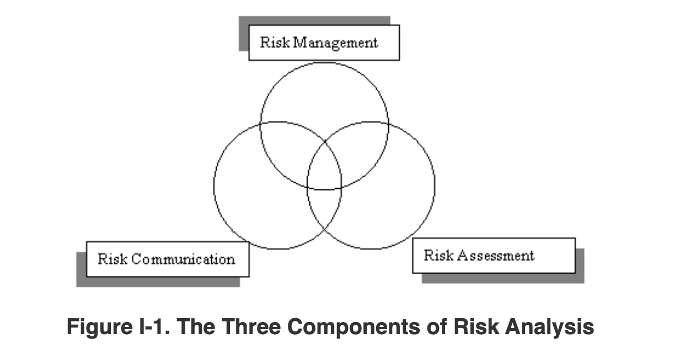
What the FDA and Congress are doing instead is collapsing the entire system, while conflating risk assessment with risk management. They take the existence of any potential hazard and skip straight to prohibition. Risk management is supposed to mean banning the harmful products or doses — not banning every detectable molecule. That’s why the allergen gluten is labeled for those who are sensitive or intolerant to it, and why wheat, barley, rye and other gluten-containing grains are not banned outright. The approach that allows potentially harmful ingredients to be banned or restricted, with closely related ones permitted, with or without specific qualifications depending on potential risks to specific sub-populations, is referred to as tiered or laddered risk management.
The European Food Safety Authority (EFSA), one of the world’s leading food-safety agencies, evaluates THC the way toxicologists typically evaluate risk: by looking at how much THC people actually consume, not how much happens to be present in a bottle, package, or container.
EFSA looked at the science and identified the lowest dose at which THC produced noticeable effects and then applied a series of safety buffers to account for uncertainty and differences between individuals. The result was an extremely conservative safety threshold designed to protect sensitive populations: 1 μg THC per kilogram of body weight, or about 0.07mg THC for someone weighing 154 lbs.
Note that critics have pointed out many flaws in EFSA’s assessment. EFSA based its calculations on studies involving particularly vulnerable patients and then layered additional safety factors on top of that. That’s what EFSA always done because it operates by the ‘precautionary principle’ which is built into its remit. The reality is that with such precautionary approaches intended to handle uncertainty, regulators may build multiple cushions into their calculations that were already highly protective, subsequently preventing a large number from being able to access beneficial amounts.
Even EFSA’s highly conservative THC assessment is based on actual exposure—how much THC a person consumes relative to body weight. Congress did something much more primitive scientifically: it imposed a flat 0.4 mg THC-per-container limit regardless of how the product is used. For example, a 30-day bottle of full-spectrum CBD oil containing 0.5 mg THC total would expose a consumer to just 0.017 mg THC per day—well below even EFSA’s conservative threshold for most adults—yet the product would be banned in the US. This makes no sense—unless you’re in Big Pharma and you want to eliminate any kind of competition for products that might be used in place of drugs.
Let’s put some more perspective on just how bad Congress has got this: If FDA regulators were forced to apply the same logic they’re using on THC to alcohol, they would have to restrict the sale of yogurt and other naturally fermented foods because fermentation produces trace amounts of alcohol. They would have to regulate flaxseed and apples, which contain cyanide compounds. They might even have to ban coffee because caffeine at high doses is known to be harmful.
Meanwhile THC — a substance with documented neuroprotective properties, a therapeutic index estimated greater than 50,000, no recorded fatal overdose in humans, and chronic toxicity observable only at massive doses — gets the harshest treatment of all.
What About Hormesis?
There’s an even deeper problem the federal approach refuses to acknowledge: the dose-response curve for many bioactive plant compounds is non-linear. It’s more often than not hockey stick-shaped. This is the principle of hormesis — the well-established observation that low doses of substances can produce effects opposite to their high-dose effects. Selenium is essential in trace amounts and toxic in larger ones, yet no one has ever been poisoned by brazil nuts that can contain over 100 micrograms of selenium per nut. The same hormetic relationship also applies to key botanicals like curcumin in turmeric and resveratrol in grape skins. The science is clear: it’s not just a question of understanding the dose/response relationship, context is also important. This means the matrix within which a compound is delivered can make a big difference to how the nutrient functions in the body. These kind of nuances appear to have completely escaped the authors of the hemp provisions in the appropriations bill.
Hemp contains close to 500 known compounds — more than 60 cannabinoids, more than 140 terpenes, plus fatty acids and other phytochemicals. The genuine therapeutic value of hemp comes from what researchers call the entourage effect: these compounds work together, and the whole is more powerful than any isolated piece. A 2015 study found that purified CBD modestly reduced inflammation and anxiety in mice, but a full-spectrum extract — the same CBD plus the natural supporting cast — worked substantially better.
A policy that pretends every molecule of THC is dangerous — that there is no safe trace dose— is not grounded in science. It’s politics, pure and simple.
What’s Next — And What You Can Do
The good news: this fight isn’t over. Multiple lifelines have been introduced in Congress, and grassroots pressure is exactly what they need to advance. If you value CBD and other products derived from hemp – please act now!
The Hemp Planting Predictability Act (S. 3686) — introduced January 15, 2026, by Senators Amy Klobuchar (D-MN), Rand Paul (R-KY), and Jeff Merkley (D-OR) — would extend the implementation window from 365 days to three years, giving Congress time to develop a workable regulatory framework rather than letting an entire industry collapse on schedule.
The Cannabinoid Safety and Regulation Act (CSRA) (S.3474) — introduced by Senators Ron Wyden (D-OR) and Jeff Merkley (D-OR) — is the broader fix. It would reverse the hemp ban outright and replace it with a real regulatory framework: mandatory testing for potency, pesticides, heavy metals, and byproducts; transparent labeling; a ban on synthetic cannabinoids like illicit delta-8; age restrictions at 21; and prohibitions on packaging designed to appeal to children. Crucially, it states explicitly that a dietary supplement may contain hemp-derived cannabinoids and cannot be deemed adulterated simply because it contains CBD or other cannabinoids — directly overriding the FDA’s drug-exclusion back-channel.
In other words, the CSRA does what proportionate risk management is supposed to do. It targets actual problems — untested products, synthetics, youth access — without criminalizing responsible adult use of safe, beneficial plant compounds.
Action Alert!

My Humanitarian project is all about Hemp. Our 1st President paid farmers land if they grew hemp. All 3 ships Nina, Pinta and Santa Claira all had hemp sails, rope beds, etc. The Wagons that crossed America had hemp tarps that sheltered the Wagons. Hemp can clean our farm lands. SAVE HEMP