


FDA’s proposed GRAS reform could deliver long-overdue transparency to what’s in America’s food supply—but unless the agency modernizes its approach to natural ingredients, consumers may pay the price in reduced innovation, choice, and access. Action Alert!
Listen to the audio version of this article:
THE TOPLINE
- FDA’s proposal would end undisclosed “self-GRAS” determinations by requiring companies to notify the agency and making GRAS notices and supporting information publicly available.
- Its exemption for traditional ingredients is tied to pre-1958 use and processing methods, potentially treating modern extracts, concentrates, fermented ingredients, and standardized botanicals much like genuinely novel chemicals.
- A better final rule would protect the streamlined pathway for existing ingredients, prevent companies from being penalized for FDA processing delays, and create lower-burden pathways for ingredients with a credible history of safe use.
With GRAS reform being a headline priority for Secretary Kennedy shortly after he came into office, FDA has finally moved to reform a key pathway for how certain food ingredients come to the market known as the GRAS (Generally Recognized as Safe) system. That is overdue. But the agency’s proposed cure—delivered as a proposed rule on August 10—could punish the natural product sector. Simply put, these changes could make it harder to access a variety of functional foods, health foods, and ready-to-drink products that millions of consumers rely on.
Reacting to the rule, ANH’s founder and Executive Director, Rob Verkerk, PhD, said:
There are some positive elements in FDA’s proposal, particularly the attempt to bring legacy GRAS ingredients into a more transparent system without immediately forcing every long-established substance through a full new safety dossier. But FDA has missed the opportunity to create a genuinely risk-based, tiered system that distinguishes between novel substances and ingredients with decades of safe human use—and that leaves considerable legal and regulatory uncertainty while potentially asking an already resource-strapped agency to scientifically evaluate far more GRAS notices than it can realistically handle.
FDA Ends Undisclosed Self-GRAS
The Food and Drug Administration (FDA) has unveiled a proposed rule that would require companies to notify the agency when they conclude that a substance is GRAS for a particular use in human or animal food. Under the current system, a company may reach an independent GRAS conclusion and place the substance into the food supply without notifying FDA. This practice is sometimes referred to as “self-GRAS.” (For more background, you can consult our previous coverage and our white paper.)
The lack of transparency in the self-GRAS system has been its real weakness. It has allowed some companies—likely a small minority—to cut corners in the way they have self-affirmed the safety of ingredients in the knowledge there is no agency or independent scrutiny, leaving consumers, independent scientists, and even FDA without a complete picture of substances entering the food supply. In our 2025 white paper, we called for disclosure and accountability while warning that reform must preserve access to safe, beneficial natural ingredients. It makes little sense to subject a familiar nutrient with a long history of safe human consumption to the same default regulatory burden as a genuinely novel, new-to-nature chemical with no comparable history of exposure.
A Welcome Off-Ramp for Ingredients Already in Use
There is some good news. FDA did not propose forcing every currently marketed self-GRAS ingredient through a mandatory GRAS application program. Instead, self-GRAS ingredients already on the market before a final rule takes effect could use a time-limited streamlined submission.
Speaking to this, ANH General Counsel Jonathan Emord said:
While the rule does not mirror the recommendations we made to FDA in our white paper, it does take into account many of the factors we recommended. In particular, rather than mandate that all self-GRAS determinations be rendered void subject to the filing of new GRAS applications with FDA, the agency has instituted a GRAS notice requirement. Under this requirement, any party that wishes to introduce a food additive must send a GRAS notice to FDA. FDA will then either approve the notice or reject it. If the latter, then the party has to file a GRAS application and obtain formal approval from FDA. This notification system is far less draconian and will present far fewer market disruptions than the mandatory GRAS application system many feared would be adopted.”
That is a partial win. It avoids the regulatory tsunami that could have followed if every existing independent GRAS conclusion had immediately required full review. It also gives FDA the information needed to build a more complete public inventory.
…With an Important Caveat
The proposed rule creates unnecessary legal uncertainty for companies that make these streamlined GRAS submissions. While FDA gives industry one year to make the filings, it sets no corresponding deadline for the agency to process or post them on its public list—yet the exemption from the full GRAS-notice requirement seems to depend on the submission being included on that list. FDA itself acknowledges that availability of the public list is necessary for industry to know whether the exemption applies.
This problem is compounded where multiple companies market the same ingredient. FDA contemplates that once a streamlined submission is posted, any person may rely on that listing for the same substance and conditions of use, potentially avoiding duplicative filings. But until FDA actually posts the submission, other companies have no clear basis for relying on it. Faced with the same one-year deadline, multiple suppliers may therefore submit substantially identical notifications simply to protect themselves, generating needless paperwork for industry and precisely the administrative burden FDA says the streamlined pathway is intended to reduce.
A company could submit all required information fully and on time yet remain in regulatory limbo for months, or longer, simply because FDA has not acted. The clearest interim solution will be for companies to cooperate on submissions, dividing labor on individual submissions between them, through trade associations and ANH’s own Corporate Leadership Circle.
The final rule should make the exemption effective upon FDA’s receipt of a complete, timely submission, require the agency to post complete submissions within a short, defined period, and provide a searchable mechanism allowing companies to identify and rely on pending submissions covering the same substance and conditions of use.
The Natural Ingredient Exemption Is Frozen in 1958
The proposal’s treatment of traditional ingredients leaves much to be desired. FDA would preserve a narrow exception for a food ingredient of natural biological origin that was widely consumed in the United States for nutrient purposes before January 1, 1958, without known detrimental effects or safety hazards, and only when processed using methods conventional before that date.
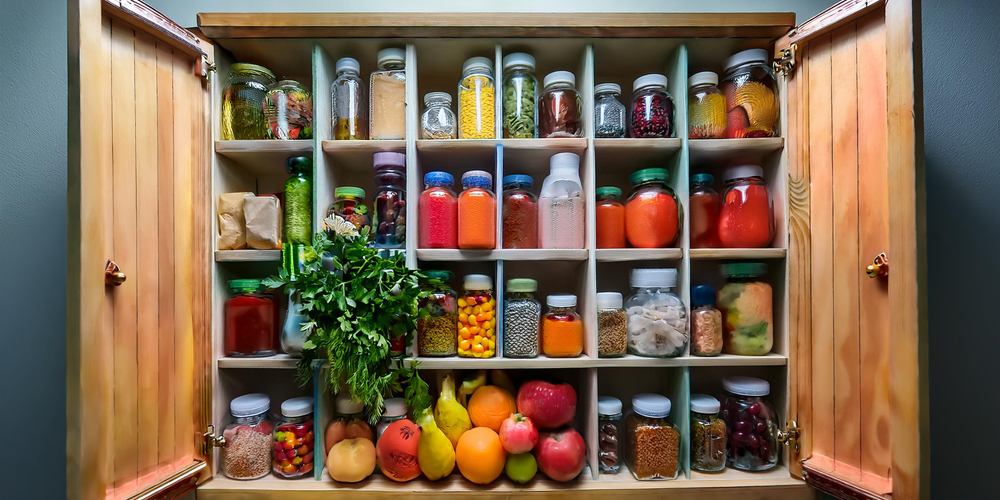
That standard does not reflect how natural ingredients are responsibly made today. Modern extraction, isolation, concentration, fermentation, and standardization can improve consistency and quality without necessarily changing an ingredient’s chemical identity or materially increasing exposure. Yet a long-used botanical supplied as a standardized extract, isolate, or fermented preparation will likely fall outside FDA’s narrow exception.
Take something like sulforaphane, a plant compound found at low levels in cruciferous vegetables like broccoli, cabbage, and kale. If a company were to isolate or concentrate sulforaphane from broccoli sprouts for use in food, the long history of eating broccoli and its young sprouts would not necessarily satisfy FDA’s exemption: consumers were not widely consuming isolated sulforaphane before 1958, and the modern extraction or concentration process itself may not have been conventional at that time. The result is that an ingredient derived from a familiar, long-consumed food could be pushed into the same mandatory notification framework as a genuinely novel substance simply because modern technology allows it to be delivered in a more standardized or concentrated form. This is exactly how the EU’s novel food program works and it has caused many challenges for modern botanicals caught in the crosshairs of over-zealous EU regulators.
ANH proposed a more rational safe harbor: ingredients with at least 30 years of credible safe food use would enter a low-burden first tier, while modern preparations of traditional ingredients could qualify when they do not change chemical identity or materially alter the relevant exposure profile. FDA largely declined that risk-based approach.
The FDA could also supply a non-exhaustive list of “grandfathered” ingredients under this clause so companies don’t need to guess which ingredients satisfy these criteria.
Not Premarket Approval, but Still a Commercial Gatekeeper
For new ingredients that do not qualify for an exemption, companies would have to assemble and submit a full GRAS notice. FDA proposes up to 45 days to decide whether to file it, followed by a 180-day evaluation period and as many as two 90-day extensions. That could mean 360 days of FDA evaluation after filing.
Strictly speaking, a company would not have to wait for FDA’s final response before marketing. Once FDA files the notice, the notification requirement is treated as satisfied. An eventual “insufficient basis” letter would not erase compliance with the filing requirement, but FDA says it could inform post-market action.
That distinction matters, but it does not eliminate the commercial risk. Investors, distributors, retailers, insurers, and larger brand customers may hesitate to support an ingredient while FDA review remains unresolved.
But the burden is not speculative: FDA estimates 180 hours to prepare a full notice and concludes that the proposal would have a significant economic impact on a substantial number of small entities.
In practice, a system can remain technically non-premarket while still becoming a de facto commercial gatekeeper. Large companies can spread compliance costs across bigger portfolios. A small botanical, nutraceutical, functional food, or ingredient company has far less room for delay, legal uncertainty, or a costly second submission.
What This Could Mean for Consumers and Practitioners
This all may sound very technical, but the practical effect on consumers will be real assuming the new rules go into law unchanged.
If smaller suppliers decide that a new botanical extract, phytonutrient, fermentation-derived ingredient, or other natural compound is too expensive or uncertain to bring through the GRAS process, consumers may see fewer functional foods and beverages containing those ingredients, less competition, and potentially higher prices. Practitioners who rely on food-based approaches to help patients improve nutrition and metabolic health could likewise have fewer innovative products to recommend.
There is also a subtler effect: innovation may migrate toward companies with the deepest pockets rather than toward the ingredients with the greatest potential benefit. ANH has warned that onerous evidence requirements can favor large corporations and create barriers for smaller natural-health innovators. That means the practical question is not simply whether an ingredient is legally permitted. It is whether anyone can afford to develop it, persuade retailers to carry it, and keep it on the market while regulatory uncertainty is unresolved.
Transparency Is the Clear Win
The proposal would make filed GRAS notices, FDA response letters, and non-exempt supporting information available through a public inventory. That advances a core ANH recommendation. New-found sunlight will be able to expose weak safety rationales, help responsible companies distinguish themselves, and give consumers and independent experts a clearer view of what is entering the food supply.
But transparency should be paired with proportionality. A long-used nutrient or botanical should not face the same default burden as a genuinely novel substance with no meaningful history of human exposure.
Next Steps
ANH will press FDA to keep the streamlined pathway for existing uses, modernize the outdated common-use exception, and adopt tiered evidence requirements that focus agency resources on substances presenting genuine safety concerns. Reform should also preserve the public inventory and meaningful disclosure.
ANH-USA will be submitting detailed comments prior to the close of the deadline for public comments on December 9, 2026.
We must urge FDA to protect transparency without turning a food-safety reform into a barrier that entrenches large companies, sidelines responsible natural-product innovators, and shrinks consumer choice.
Real reform should target risk, reward a credible history of safe use, and keep safe natural ingredients accessible.
Action Alert! Post a comment to the FDA’s docket below to call for rational reforms to the GRAS system.

This is all such a bs clown show, lol. The “fragrance industries” making toxic synthetic fragrances from petro chemicals in everything from noxious colognes. perfumes,, body sprays (Axe- one child wearing it sent a his whole classroom of elementary kids to the emergency room), “air fresheners”, laundry sheets, etc. do whatever they want with impunity; poisoning the rest of us in public spaces where the poisons do not even get filtered through the blood stream, but go straight to our lungs and brains.
I was at a movie theater a few weeks ago, and it was akin to toxic mustard gas cloud during the whole screening. When I was home I took off my shirt, and the whole back of it smelled as if someone had sprayed copious amounts on it. It took two wash cycles to even get it off of the shirt. I have seen a woman at work have an asthma attack from perfume being sprayed in the workplace and toxic carpet cleaning during work. This is insane. So is our government- other than the good that is now slowly starting to happen under Pres. Trump and RFK Jr., despite the treasonous deep state’s attempts to stop it and kill us all.”