


Another ill-conceived effort to reform the Generally Recognized as Safe (GRAS) pathway directly threatens access to countless safe supplements and natural products. Action Alert!
THE TOPLINE
- Rep. Pallone’s GRAS reform bill would eliminate the self-affirmed GRAS pathway and replace it with an FDA pre-approval system—raising costs, reducing competition, and threatening access to many safe, natural supplement ingredients.
- The bill gives FDA broad new powers to retroactively challenge existing ingredients and to reassess GRAS substances without considering dose, opening the door to EU-style bans on nutrients essential for health.
- While transparency reforms are needed, abolishing the “self-GRAS” pathway entirely would overwhelm FDA and harm consumers, all while failing to address the real problem: the risk assessment approach used by the agency itself that has allowed many dangerous food additives to remain on the US market.
Over the last few months, we’ve been telling you about federal bills aimed at reforming how food and supplement ingredients come to the market through the “Generally Recognized as Safe” (GRAS) pathway. These bills have come on the heels of HHS Secretary Robert F. Kennedy Jr. identifying the elimination of dangerous food additives as a priority, asking the FDA to explore eliminating the “self-GRAS” pathway, whereby companies certify an ingredient as GRAS and add it to food without notifying the agency.
We’ve argued that many of these proposals, however well-intentioned, are misguided. Yes, we all want safer food. Yes, some unscrupulous companies may take advantage of the self-GRAS pathway to sneak bad ingredients into food. But the truth is that the US GRAS system is the primary mechanism used to get micronutrients—like vitamins, minerals, amino acids, and thousands of botanicals—as well as food additives like dyes, preservatives, thickeners and a whole host of other additives that have technological, rather than nutritional, functions, onto the US market.
This means that if you set up roadblocks and pre-market approvals for the food additives that any health-conscious consumer might have concerns about, you also threaten consumer access to thousands of entirely safe, natural ingredients which come to the market as GRAS—including many of the ingredients in supplements you care about. Changing the entire regime into a de facto pre-market approval system, with the FDA as the gatekeeper, is, as we wrote in our white paper on this topic, like throwing the baby out with the bathwater. It will have the effect of reducing consumer access to some of the healthiest ingredients that are both know to be safe and proven to be of benefit to health. It will also impact the smaller, more innovative manufacturers and suppliers the most by creating regulatory barriers that are only accessible to big players. This is exactly what we don’t want because it ends up depriving citizens of choice.
A Push for Reform That Misses the Mark
A bill introduced by Rep. Frank Pallone (D-NJ) to reform the GRAS system makes many of the same mistakes as the other bills we’ve covered previously (here and here). Rep. Pallone’s bill proposes eliminating ‘self-GRAS’ entirely, requiring companies to submit detailed notifications to the FDA on new GRAS substances; only after the FDA has issued a written statement to not object to the GRAS notice can that ingredient be used. This is a pre-approval system for GRAS ingredients, plain and simple, which will increase costs, decrease competition, and eliminate many safe, healthy ingredients from the marketplace.
Speaking to the problems with this bill, ANH General Counsel Jonathan Emord said, “Regrettably, Congressman Frank Palone’s bill eliminates all future self-GRAS but grandfathers all prior self-GRAS determinations, leaving in the market the very subset of unsafe food additives in need of removal. The bill is underinclusive and overinclusive, failing to direct government to target demonstrably unsafe food additives for market removal, whether FDA approved or self-GRAS—the approach ANH advocates in our white paper on the subject).”
A Dangerous Expansion of FDA Power
Further, the FDA is handed the authority to require a GRAS notice for any ingredient considered GRAS before the enactment of the bill, giving the agency arbitrary authority to go after ingredients it doesn’t like. You can bet that natural substances and supplements that compete with drugs are on the hit list.
The Precautionary Principle Problem
The bill also requires the FDA to reassess 10 GRAS ingredients every three years, looking at, among other things, whether the ingredient is carcinogenic or can cause reproductive or developmental issues—without specifying that the assessment should be based on the intended use and dose. This pushes us directly into the problems caused by relying on the precautionary principle which dominates assessments by the European Food Safety Authority (EFSA), thatwe wrote about previously, that have been catastrophic for consumer choice in Europe.
Emord also spoke to this issue: “This bill invites all new food additives to be assessed for carcinogenicity and mutagenicity without regard to dose. That undermines the historic toxicological basis for adulteration law—in effect, the Paracelsian Principle—wherein dose determines toxicity. Without that limitation on the exercise of government power, FDA may well adopt the Precautionary Principle as used in the EU, which gives essentially unbridled discretion to the government to remove food additives on cancer or birth defect grounds without having to prove those effects result from the form or dose levels actually being recommended. That approach would, if applied to existing food additives and other GRAS ingredients, cause many to be banned that are health enhancing, such as those containing selenium. That is because many substances we commonly consume, and are essential for good health, become carcinogenic or mutagenic at high dose levels. It is a foundational truism of toxicology that everything—even water—is toxic at some dose level.
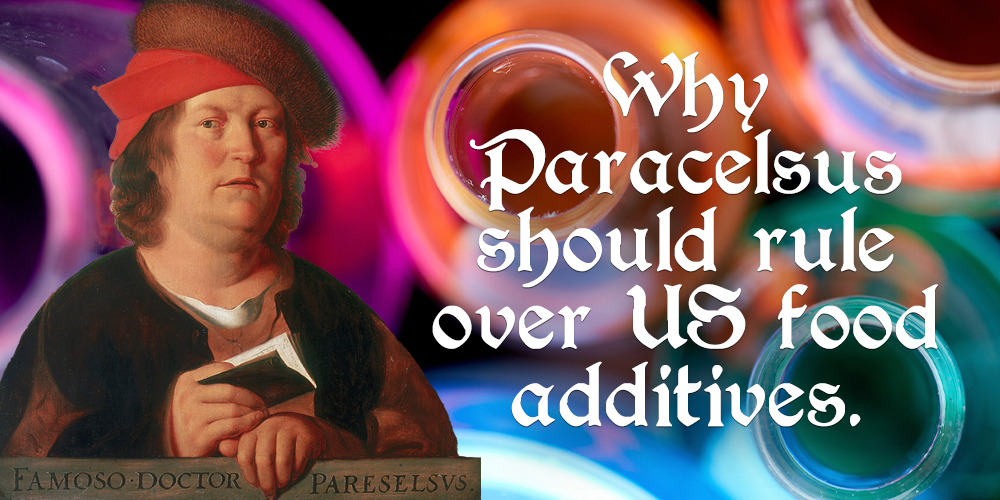
The upshot is, under bills like Rep. Pallone’s, we risk losing access to safe, health-promoting ingredients due to a misapplication of the precautionary principle. This is a principle that gathered momentum decades back as a means of limiting exposure to environmental chemicals like pesticides and air pollutants to which exposure has no benefits, only the potential for risk. So when regulators now apply this same principle to substances like nutrients that have distinct benefits, they risk using the inevitable uncertainty in the science to eliminate exposure (altogether or at least a beneficial levels), so depriving us of benefits.
Transparency Is Needed—But This Isn’t It
None of this is to say that there aren’t problems with the current GRAS system. We’ve laid out these issues in detail in our recent white paper, Reforming GRAS: Food Safety Without Sacrifice. Notably, the drive towards more transparency is crucial. It is not acceptable that companies can self-certify an ingredient as safe and add it to our food without any transparency or accountability. That’s why, among other recommendations in our white paper, we call for the creation of a GRAS Transparency Register, making all GRAS determinations public for review by independent experts, consumer groups, and researchers.
The Real Source of Harmful Additives: FDA Approvals
There’s a common misconception that the self-affirmed GRAS pathway is the main culprit behind the flood of harmful ingredients in our food supply. But many of the additives most often cited by critics—Red 40, Yellow 5, titanium dioxide, potassium bromate, aspartame, sodium nitrite, and BHA—have actually been reviewed and approved by the FDA, either as food or color additives or through the GRAS process itself. These substances were greenlit despite substantial evidence of health risks. The real issue, then, is that most harmful additives were approved through official FDA channels—not industry exploitation of loopholes.
A Better Path Forward
Abolishing the self-GRAS pathway altogether, as proposed by Rep. Pallone’s bill as well as other bills, would wreak havoc on the food and dietary supplement industries and create an enormous workload for the FDA, which the agency would likely be unable to manage given current staffing. Creating another de facto pre-market approval system undermines the original purpose of the GRAS pathway: to streamline the introduction of safe ingredients, including many natural ingredients, into food.
We need lawmakers to hear from YOU, their constituents, that real reform means not throwing the nutrient baby out with the GRAS bathwater.
Action Alert!